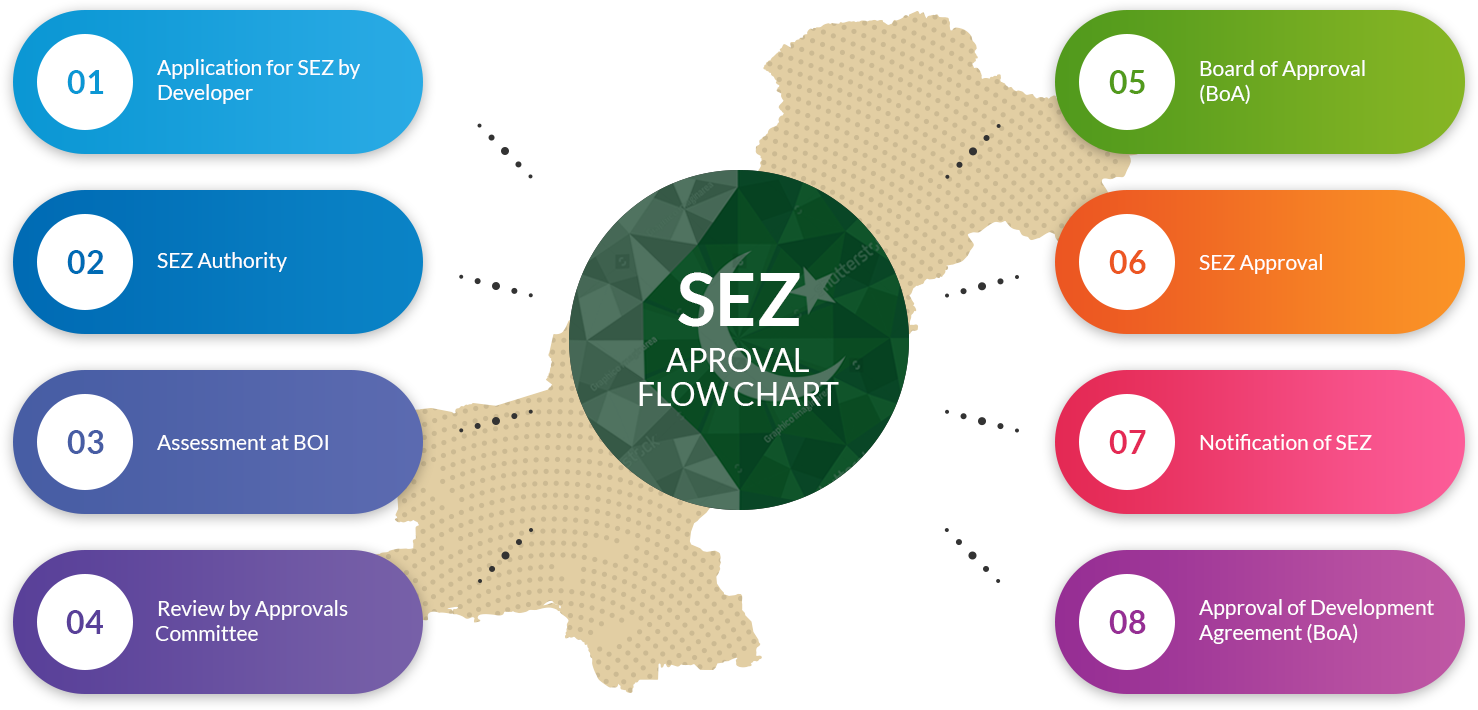
Special economic zones
Pakistan’s Industrial Transformation, Zone by Zone
When China and Pakistan launched the China-Pakistan Economic Corridor in 2015, the world saw a corridor of roads, ports, and power plants. What received less attention was the industrial layer being built alongside that physical infrastructure a network of Special Economic Zones designed to turn Pakistan from a transit route into a manufacturing nation. By 2026, that network has grown dramatically, carrying both serious achievements and honest challenges.
From 7 to 44 The Expansion That Changed the Map
Pakistan’s Special Economic Zones have expanded from just seven in 2019 to 44 by 2025, following the notification of 37 new zones through coordinated efforts led by the Board of Investment. This is not simply a bureaucratic milestone. Each approved zone represents a designated industrial corridor with its own sectoral focus, geographic logic, and investment pipeline stretching from Khyber Pakhtunkhwa in the north to the Balochistan coast in the south.
The long-term plan for CPEC Industrial Cooperation has been finalised and is being implemented through a structured action plan aligned with CPEC Phase 2.0, emphasising industry-led growth, export-oriented manufacturing, technology transfer, and value addition with SEZs serving as anchor platforms.
The Four Zones Leading the Way
Nine SEZs were designated in the first phase of CPEC, covering sectors including food processing, ceramics, and textiles. As of 2025, four have moved beyond the planning stage to partial implementation: Rashakai in Khyber Pakhtunkhwa, Allama Iqbal Industrial City in Punjab, Dhabeji in Sindh, and Bostan in Balochistan.
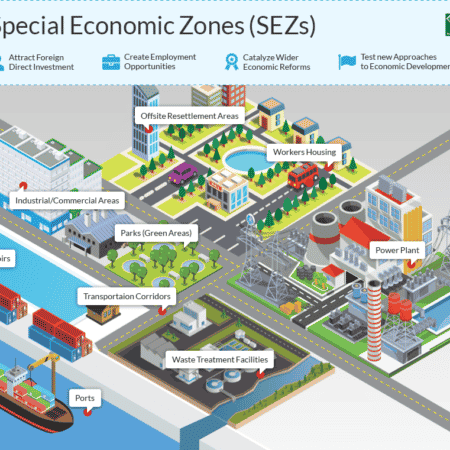
Rashakai SEZ in Nowshera, KP, is positioned along key transport routes connecting Pakistan to Central Asian markets. It is promoted as a manufacturing and logistics zone, targeting garments and textiles, building materials, electronics, electrical appliances, and automobile and mechanical equipment.
Allama Iqbal Industrial City in Faisalabad is the most advanced of all CPEC SEZs. Early development phases in key clusters around Faisalabad had reached occupancy rates of approximately 73 percent by 2025, reflecting genuine investor confidence. A 700-megawatt solar power plant has been planned to provide dedicated renewable energy to this zone an infrastructure commitment that sets it apart from earlier industrial parks.
Dhabeji SEZ in Sindh draws its strategic value from proximity to Karachi and Port Qasim. Its location near Karachi gives it direct port-linked logistics advantages, enabling raw material imports and finished goods exports without major inland transportation costs.
Bostan SEZ in Balochistan is designed to bring industrial activity to a province long left behind by Pakistan’s economic centers. Its target sectors include fruit processing, pharmaceuticals, ceramics, electric appliance assembly, chromite processing, and halal food manufacturing all industries that align with Balochistan’s natural resource base.
The Incentive Architecture
The fiscal benefits under Pakistan’s SEZ law include a one-time exemption from customs duties and taxes for all capital goods imported for the development, operation, and maintenance of a zone applicable to both developers and zone enterprises along with a full exemption from income taxes for a period of ten years. These incentives apply equally to Pakistani and international investors, with no exclusive arrangements for any single nationality creating a genuinely open investment environment.
The Honest Picture Targets Missed, Course Corrected
Pakistan’s original targets of attracting over $8 billion in FDI and generating 500,000 jobs through SEZs between 2018 and 2024 were not met. The Investment Minister acknowledged this publicly at the Pakistan-China Industrialization Dialogue in May 2026. But the numbers that have been achieved deserve recognition too. CPEC has cumulatively attracted $30 billion in realized investment across energy, transport, and industrial sectors and has directly created over 261,000 jobs since 2015.
What CPEC 2.0 Changes
Where the first phase created zones largely as administrative designations with limited supporting infrastructure, CPEC 2.0 is investing in making them operationally viable connecting them to power, water, roads, and digital systems before pitching them to investors. A B2B Investment Conference held during Pakistan’s Prime Minister’s visit to China in September 2025 resulted in over 160 memoranda of understanding and joint ventures, with a follow-up mechanism in place to convert commitments into actual investment activity.
The most concrete signal of what is coming? BYD’s announcement that it will assemble electric and plug-in hybrid vehicles in Pakistan by July or August 2026 a manufacturing commitment from one of the world’s most valuable automotive companies, made possible in part by the SEZ infrastructure CPEC has built.
Pakistan’s SEZ story is not a finished chapter. It is an industrial revolution still being written with the zones, the laws, the Chinese partnerships, and the investor confidence now in place to write it faster than before.