Infrastructure & Logistic
The Backbone of Pakistan’s Economic Future
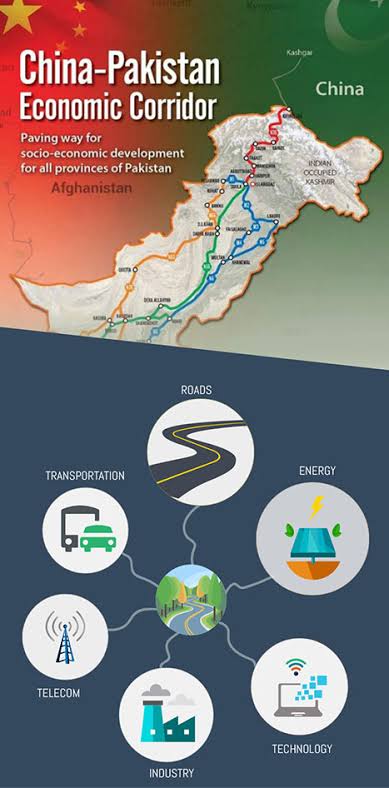
The China-Pakistan Economic Corridor is not simply a road or a port. It is a 3,000-kilometre web of highways, railways, energy grids, fiber optic cables, and industrial zones stitching together two nations and placing Pakistan at the intersection of four of the world’s most commercially vital regions South Asia, Central Asia, the Middle East, and East Africa. As of 2026, that web is tightening, deepening, and delivering results that go well beyond what maps can show.
The Scale of What Has Already Been Built
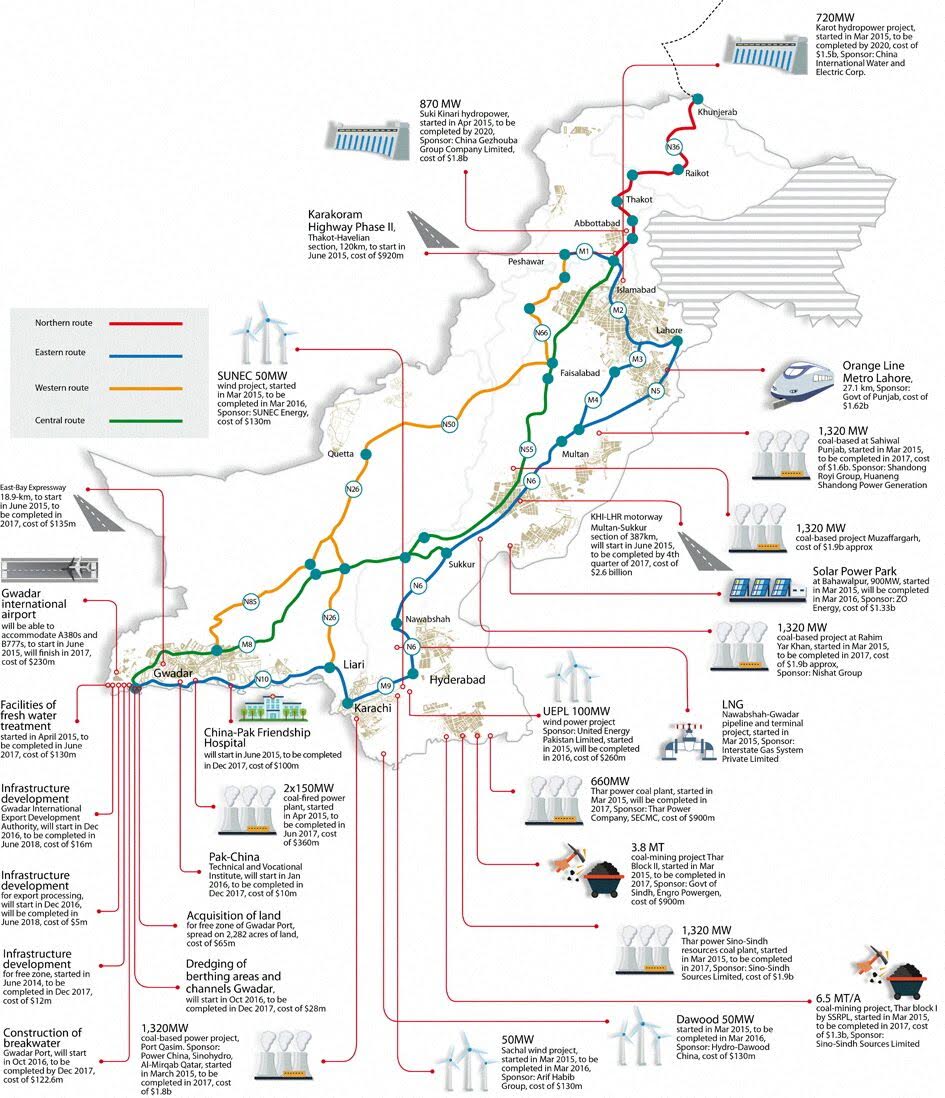
Eight major transport projects worth $6.7 billion have already added 888 kilometers of modern highways and motorways across Pakistan, with another 853 kilometers currently under construction. These are not minor upgrades. The Multan-Sukkur section of the Karachi-Peshawar Motorway, the Hazara Expressway, and the first phase of the Karakoram Highway together slashed travel times across critical freight corridors that had remained bottlenecks for decades.
On the energy side, 17 major CPEC projects with a combined installed capacity of 8,904 megawatts were completed, supported by two operational coal mines and Pakistan’s first 660 kV High Voltage Direct Current transmission line representing close to $18 billion in energy investment alone. These projects did not simply add power to the grid; they ended the blackouts that had crippled Pakistani industry for years, making the country functional for manufacturing, logistics, and sustained economic activity.
Gwadar’s Logistics Transformation
At the southern end of the corridor, Gwadar has moved from a symbol to an operational reality. The Eastbay Expressway created a dedicated, signal-free corridor linking Gwadar Port directly to the Free Zones and the Makran Coastal Highway, cutting congestion and lowering transportation costs across the supply chain. The impact was immediate and measurable.
Phase II of the Eastbay Expressway has now been proposed under Chinese grant funding, designed to connect the New Gwadar International Airport directly to the port and Free Zones enabling integrated sea-air logistics operations from a single connected node. When complete, a cargo container arriving by ship could theoretically be cleared, processed, and dispatched by air freight from the same corridor without entering congested city roads. That kind of logistics integration is what separates a functioning trade hub from an ambitious one.
The Railway Dimension ML-1 and the Missing Link
The Karachi-to-Peshawar railway modernization project, estimated to cost between $6.7 and $7 billion, is designed to enhance freight movement, cut logistics costs substantially, and directly connect production centers with ports and consumer markets. Upgrading Main Line-1 remains a declared strategic priority under CPEC 2.0 for railway modernization and the creation of an integrated transport corridor.
China and Pakistan reaffirmed their joint commitment to completing both ML-1 and the Karakoram Highway Phase II in 2024 and 2025, with the KKH upgrade focused on the critical 250-kilometre Thakot-Raikot section a high-altitude reconstruction that will keep China-Pakistan land freight flowing uninterrupted through the next decade of industrial growth.
Special Economic Zones and Industrial Logistics
Pakistan now has 44 approved Special Economic Zones under CPEC, with Rashakai SEZ along the M-1 motorway already receiving industrial investment in textiles, manufacturing, and technology transfer. These zones are not standalone parks they are deliberately positioned along CPEC’s logistics spine so that raw materials, finished goods, and export freight can move efficiently between factory floors and international markets.
A proposed Mining Corridor from Nokundi to Gwadar Port is also in planning, designed to connect Balochistan’s mineral-rich interior directly to the port’s export facilities turning underground wealth into export revenue through purpose-built logistics infrastructure.
The Human Dividend
CPEC has already created over 200,000 direct jobs across its completed projects, with long-term projections estimating up to 2 million direct and indirect employment opportunities as industrial zones come fully online. Rashakai SEZ alone is projected to generate 200,000 jobs.
In 2026, CPEC infrastructure is not a promise being made. It is a system being used and the containers, kilowatts, and kilometers are the evidence